
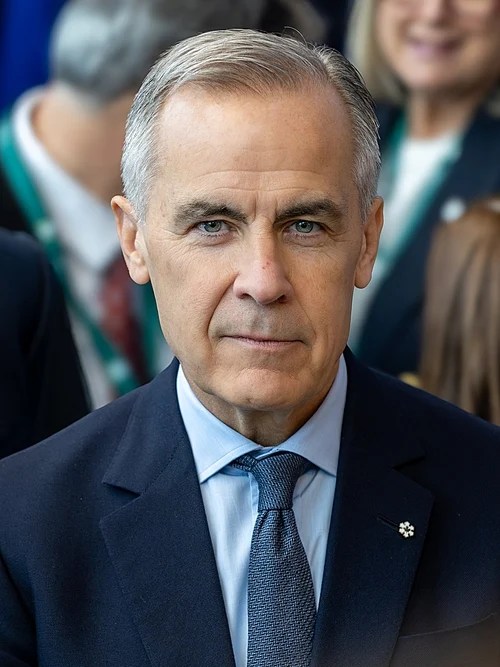
It took almost a year, but Canadian Prime Minister Mark Carney now has a majority in the House of Commons. The opposition Conservatives are crying foul.
Carney’s Liberals achieved their majority not through electoral prowess, but through convinincing MPs from other parties to switch allegiance. Supposedly this is undemocratic.
I’m not convinced of that. And I note that those squealing loudest belong to a party that in the past has benefitted from MPs crossing the floor of the House of Commons to join it. It wasn’t undemocratic when they were the government.
Democracy can vary in minor ways from country to country. Canada follows the Westminster tradition, changing party affiliation is something that has gone on for centuries. Parties that lose MPs don’t like it, but I’m not sure it could be classified as un or anti democratic.
Part of the tradition, which many people forget, is that we don’t elect parties when we vote. Unlike the US, where you can choose to vote a party ticket, Canadians elect individuals.
Yes, there is a party name on the ballot beside the candidate’s name, and that influences a lot of people. But for most of our nation’s history that wasn’t the case. Adding the party name was done in 1970.
You could argue that was the undemocratic move. instead of choosing individuals who had established themselves as the best candidate, people sometimes jump on a party bandwagon. For example, in 2011 the NDP surprised the country and surged to second place in the federal election.
A number of their new MPs, elected in what was described as the “orange wave,” were placeholders who had put their names forward so the party could say it had run in every riding in the country. Some had never visited the rising they now represented. Was that democratic? Yes, though a little strange.
Those calling for floor crossing to be banned don’t understand how the system works. I’m sympathetic because I think it is morally questionable to promise the voters to support one platform then switch to another without consultation after the election. But banning such a move would be a Constitutional violation.
Maybe Parliament can revise the electoral law to require floor crossers to face a byelection should they want to switch sides. That could easily be done.
I don’t see much demand for it, despite all the posturing of recent weeks. My usual thought is that you don’t fix a system that isn’t broken. (Much as I hate the US Electoral College system, it works. That it gave us Donald Trump is on the American people, not the system.)
Mark Carney spent his first year as Prime Minister moving the Liberal Party to the right, borrowing policies from the Conservatives and dismantling much of Justin Trudeau’s extremist agenda. The question Canadians should be asking now is not whether floor crossing should be banned, but whether Carney will now show himself to be an extremist who was wearing conservative clothing when necessary, or whether the Liberal party’s shift to the centre is here for the foreseeable future.


