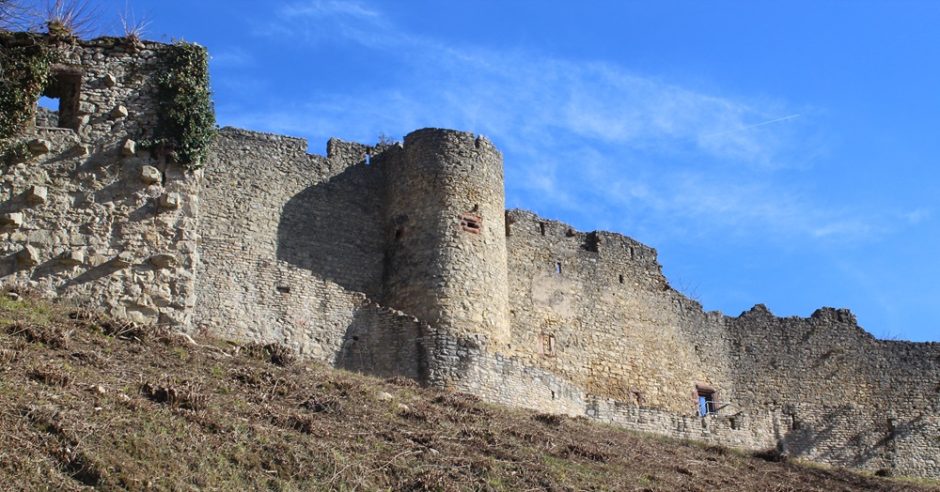

Emil Krieger’s sculpture of four mourning figures watches over the last resting place of the fallen.
It is a solemn place and a stark reminder that there were no winners in the First World War. Langemark Cemetery is a memorial to young men who fought and died for a cause they believed in. But there are no rows of white headstones here. Instead the markers are black, set into the earth. The Commonwealth War Graves Commission does not tend these graves, as there are only two Allied soldiers buried here among the 44,000 dead. The brave young men who are beneath this earth were German.
The black stone markers are set in the ground, several names on each. They once were marked by crosses, but those wooden remembrances were used as firewood by the Belgians as German forces retreated during the Second World War. An understandable contempt maybe, but it would have been nice if they had bothered to keep records of whose graves were beneath those crosses before they burned them. My understanding was the grave markers are more of a best guess than a record as to who is actually buried where. There is one mass grave which holds the remains of almost 25,000 soldiers, never individually identified. The numbers are a little mind boggling.
In Canada the government supports the Commonwealth War Graves Commission. Each Canadian contributes through their taxes, though I suspect most are unaware of that. The German government, on the other hand, does not pay for the upkeep of the (fewer) war graves in Belgium and France. That is left to a private charity and the generosity of individual Germans.
These markers are indeed a reminder that the “enemy” was no older and no different than those fighting for the “good guys.” And indeed, here who is the enemy? As I have visited Commonwealth cemeteries I have looked for family names. Every cemetery has an Anderson or two, but it is an extremely common surname and these men are not related to me. I know I have relatives buried in Europe, my great-uncle Forrest Anderson, for example, was killed in 1918 and is buried in France at a cemetery I have never visited. There are other family surnames, but most of my relatives came home.
However there could be members of my wife’s family buried at Langemark. She is a first generation Canadian, and on the wall in the entryway, in the list of the 3,000 student-soldiers killed early in the war, I find carved one of the German family surnames. It is a possibility; we’ll have to ask her aunt, the family historian. It is only this year I discovered Vivian’s grandfather had been a solider in the First World War. I wondered at first whether my grandfather and hers had perhaps faced each other at some point in the trenches a century ago, but the only battle mentioned was Verdun, where I don’t think Canadian troops saw action. I don’t know exactly where my Grandfather fought, but one of these days I intend to look up his war record at the National Archives in Ottawa. He never spoke with me about his experiences, perhaps because of my age, and the only story my mother passed along was about Siberia (which will be subject of a future post I would imagine, once I finish these vacation reflections).
The visit to Langemark was also a reminder of how society can change in a short period of time. Many of the markers showed the religious affiliation of those buried there. A large number were Jewish. They served their country with pride and distinction. Their children would be rounded up, placed on trains and shipped to death camps where they would be exterminated by the successor of the government these soldiers served.
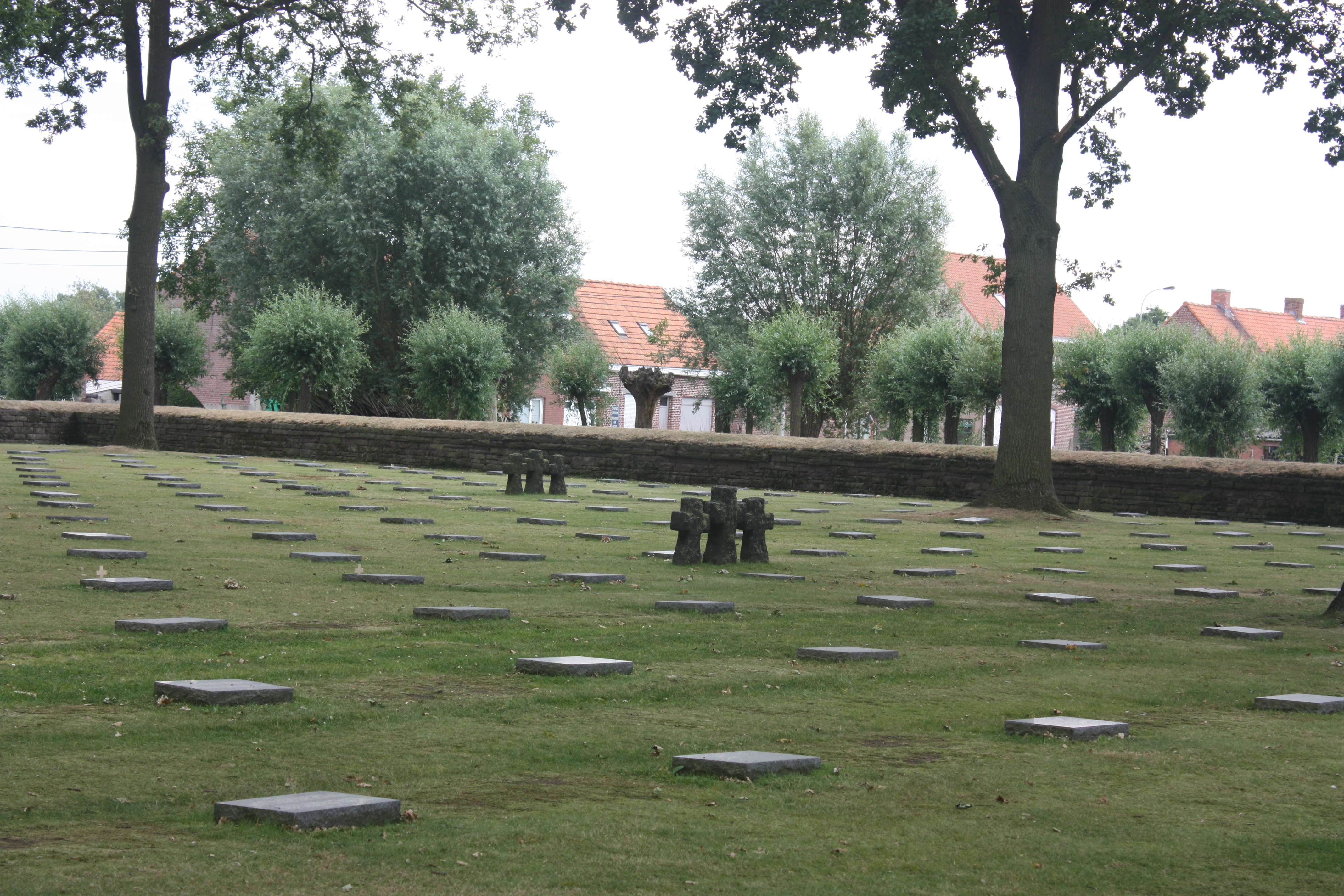
Black markers set into the ground mark the graves at Langemark German War Cenetery


 random thoughts from lorne
It’s sad that for millennia, young men have been dying as proxies for politicians’ egos, and political views. At least Alexander the Great was willing to risk his own life with those of his followers. When the heavy cavalry hit the enemy line, he led, wearing a great white-plumed helmet that marked him out for all to see.
Surely there would be fewer wars if the Great Leader had to personally lead: the Kaiser, Hitler, Johnson, Bush, Harper, Putin? Preferably in a big white plumed hat, at the front, easy to see. They would be much more likely to find more conciliatory means than when they can hide in the War Room back home, sending others to die for them.
I wonder if any legislature anywhere would have the courage to pass such a law, requiring the people who make the decisions to put their lives on the line if they believe a cause is just enough to send soldiers to die. Somehow I don’t see it ever happening.
I don’t see it happening either. That’s not to say that a good leader might feel hit hard by a loss? I watched ‘Armageddon’ a 5-part series on TVOntario. Quite graphic, with survivors with part of their faces blown away.
The US was reluctant to get into the war, according to the series, because of the bloody memories of the Civil War. That was 50 years earlier but still remembered. At McGill, a library dedicated to Osler showed a touring exhibit that was a little macabre. It was an anatomical display of the limbs that had been amputated during the Civil War. Seeing a foot and 6 cm of a leg, with a clean cut, left quite the impression. One could just visualize the flesh that had been around it before. Many amputees probably survived and lived for decades, a living reminder in the North while the South also had to rebuild.
Within that context, special events had to come together to go to war. US leaders may have been sympathetic to England in a war, but they couldn’t dare go to war without popular support. The point is there may be war fatigue that must be overcome. Maybe that’s an act of aggression. Maybe that’s an attitude of ‘we were unjustly treated, and, this time we’ve got huge superiority over the enemy in weapons so we will win’. Maybe it is new propaganda tools. In conclusion, I think it is the will of the populace to go to war. Leaders surf the wave of populism for peace or war. Even Eisenhower couldn’t curb the military-industrial complex as president.
[…] Postscript, September 6, 2014: A lot to remember, including so many without names: “Remembering the Dead“, Random Thoughts From Lorne, September 6, […]