
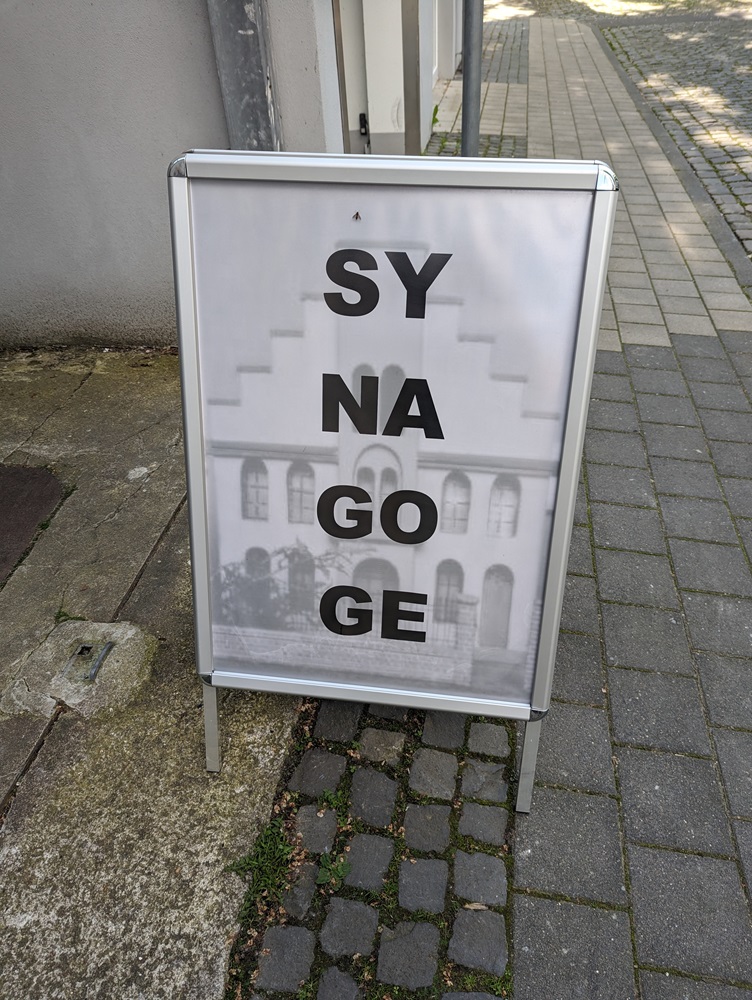
The guidebook says there is nothing to see. I guess it is a little outdated.
My wife has been visiting Lippstadt, Germany, since her childhood. She knew there had once been a synagogue, but had never visited.
This time she walked right by. The guidebook said what was once a synagogue was behind some garage doors. She didn’t notice they were open.
I almost didn’t as well. What caught my attention was the sign in the sidewalk. The letters didn’t register at first, then I got it.


There isn’t much to see inside. Not surprising – the Nazis burned the structure down in 1938, with only a wall and the back toilet left standing. It might have been a short visit, but there were volunteers from the historical society on hand to talk about the site, so we lingered. I didn’t ask, but I presumed they were there because it was a holiday.
Lippstadt today has no synagogue of course. The few Jews who do live in town worship in Paderborn, not that far away by car or train.
The historical value of the site comes from the toilet/change room at the back of the property. In 1938 it wasn’t considered worth burning. Books from the 19th century have been found in a hidden spot in the rafters.

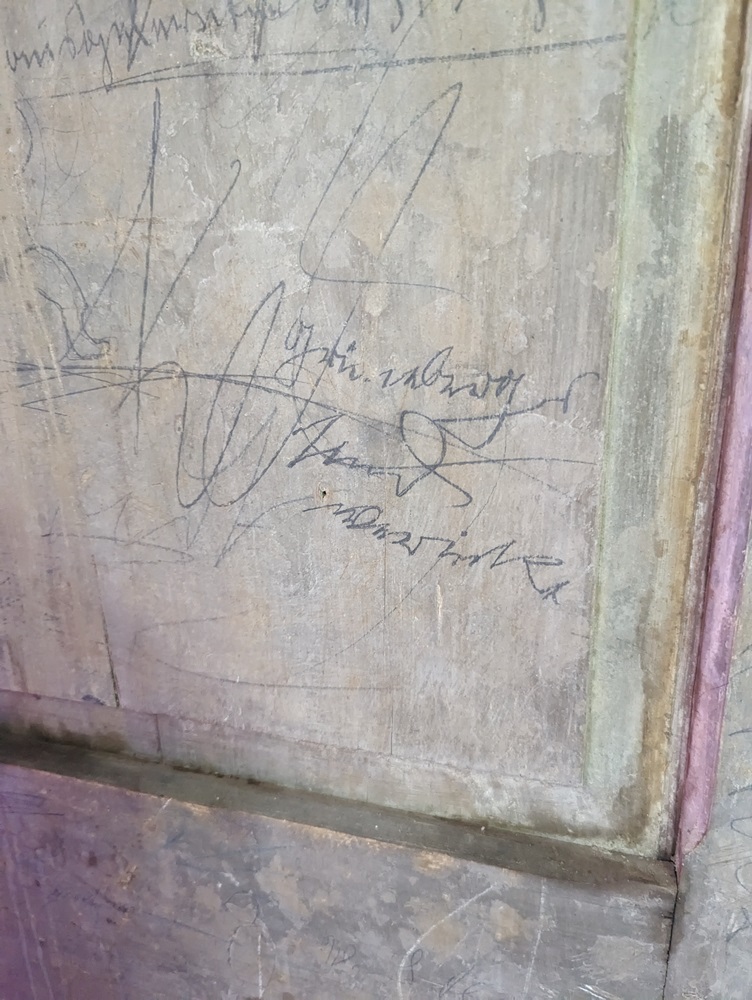
And, like in toilets everywhere it seems, there is graffiti. Not terribly uplifting, but a reminder of the ordinariness of life.
As a Canadian gentile I grew up knowing about the Holocaust and Adolf Hitler’s attempt to exterminate the Jewish people. We learned all about it in history class in school.
In Germany, the Holocaust isn’t something from the history books. It is a lived experience for everyone. Everywhere you go there are reminders of the six million who were exterminated.

The Hamas attack on Israel on October 7, 2023, saw the largest number of Jewish deaths in a single day since the Holocaust.
From a logical standpoint you couid argue that it really wasn’t that many people, and that Israel has over-reacted in its response that has seen many more die, mostly innocent Palestian civilians. Logically that would be correct – but war is rarely logical.
Israel’s response to the Hamas attack has been an emotional one in many ways. Which may be why there is no end in sight. The people trying to negotiate a ceasefire and then a peace are probably looking at the situation rationally.
Hamas’ attack wasn’t rational – they knew they couldn’t win any war they started and that thousands of their people would die. Israel’s response has been equally irrational – civilian deaths lead to more hate not less.
Standing in what is left of Lippstadt’s synagogue is a reminder of the past, and helpful in understanding the present.

 random thoughts from lorne