When the self-styled Longest Ballot Committee convinced dozens of people to run for Parliament in a federal byelection last year, I was amused. Ninety-one names on the ballot seemed a little ridiculous, but that’s democracy.
As I understood it, the idea was to protest the Liberal Party’s broken promise to make 2015 the last “first past the post” election. I’m not sure how flooding the ballot with candidates conveys that message.
They’ve done it again in this election and I am less amused. This time the protest feels partisan.
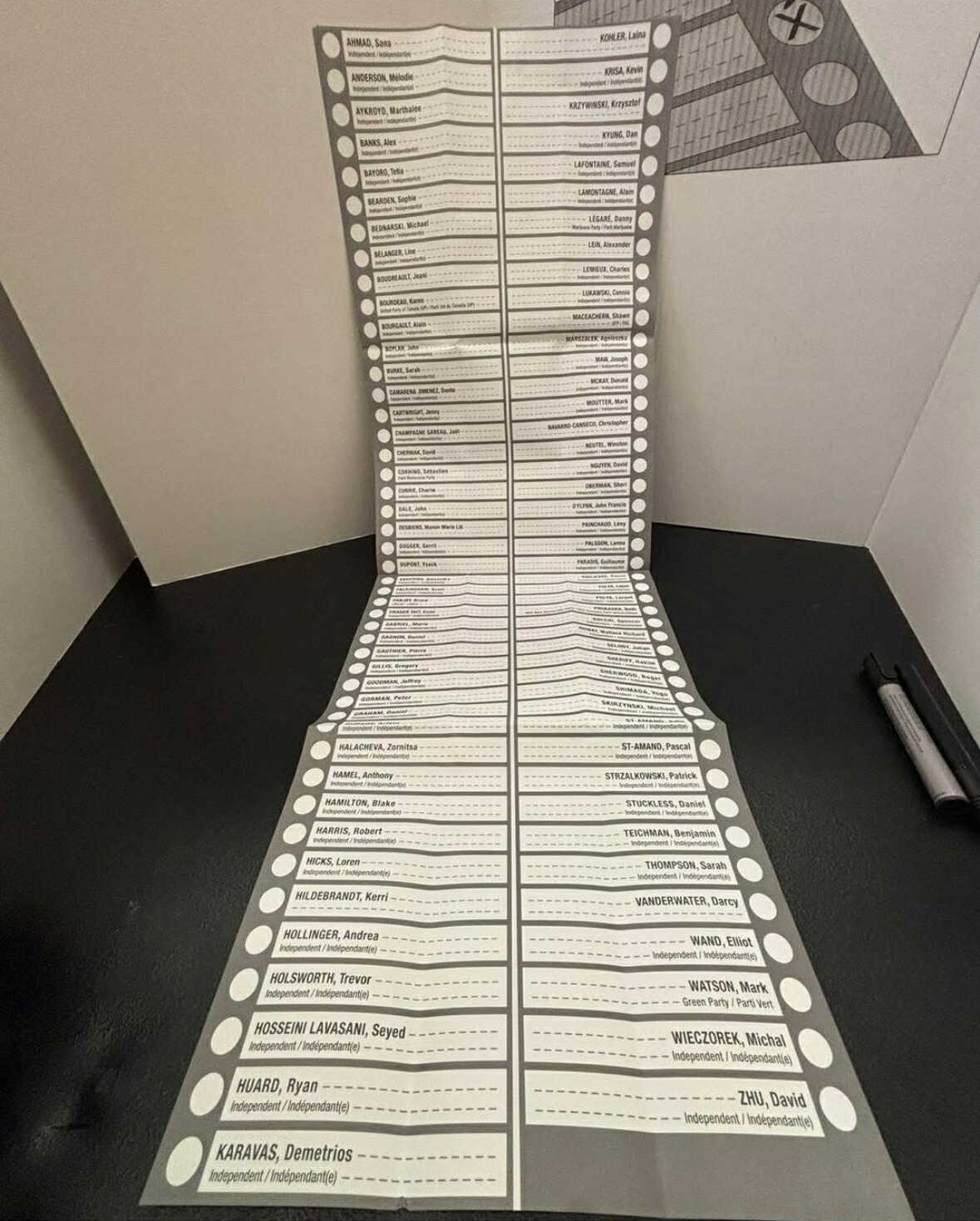
The committee is running its candidates in Carleton riding, home of Conservative leader Pierre Poilievre. Once again there are 91 names in the ballot, many of whom apparently have never set foot in the riding. (You don’t have to be a resident to run, just have the signatures of 100 riding residents.)
The ballot, pictured above, is a long one. Of the 91 candidates you would think no more than two (given the riding’s history) have a chance to win. Two or three others are from registered political parties. The rest are protestors, who are running to make it difficult for voters to find the name they want on the ballot.
Which us fine, except Liberal leader Mark Carney is running in the adjoining riding. He faces the usual number of challengers and the ballot is almost three feet shorter.
Seems strange to me that these protestors targeted one party leader and not the other. The Longest Ballot Committee claims a lack of time and resources. interesting though that they didn’t target the leader of the party that promised to reform the electoral system and then went back on its promise.
There was a lot of discussion during the past four years about foreign attempts to influence the outcome of Canadian federal elections. No-one sems to know who is behind this Committee. Are their candidates unwitting dupes? Possibly.
I can see this protest leading to electoral reform, but probably not the reform the protestors want. Until 2017 prospective candidates had to pay a $1,000 deposit to run, money that was refunded if they achieved ten per cent of the vote. I would suspect that the end result of this protest will be a return to deposit requirements.
If they had to pony up some cash, I doubt you’d find more than have a dozen names on the ballot. Which is perhaps sad for democracy, but an understandable restriction.

 random thoughts from lorne