When I was a teenager I used to carry a Bible in my back pocket. It was great to have it available to read at a moment’s notice.
It was the King James Translation. Back then it was the only full Bible available in the appropriate size, and I wanted more than just a New Testament.
Over the years I wore out a couple of them – books don’t last as long when they get sat upon. And some people suggested that it was sacrilegious to sit on the book.
These days I still carry a Bible in my pocket, an electronic version on my phone. I’ve never counted how many translations are available – but I know I have used it in German and French as well as at least half a dozen English translations. Times have changed.
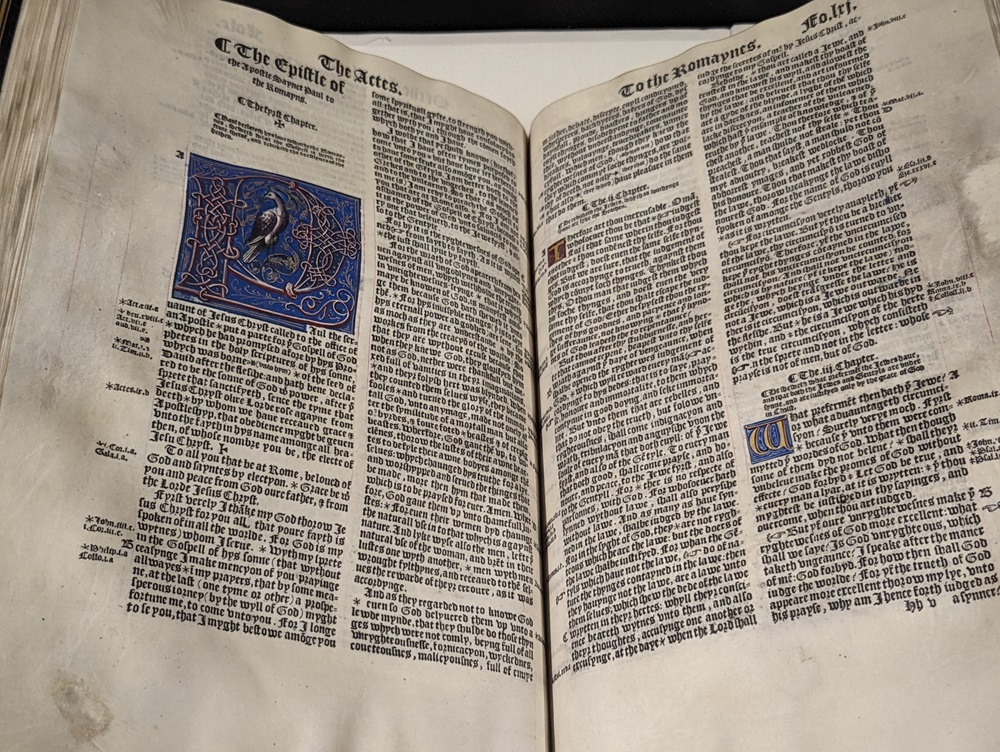
Leaving aside its religious significance, The Bible is a fascinating book. Compiled over centuries, considered by many to be divinely inspired, it tells humanity’s story. It is the world’s bestselling book.

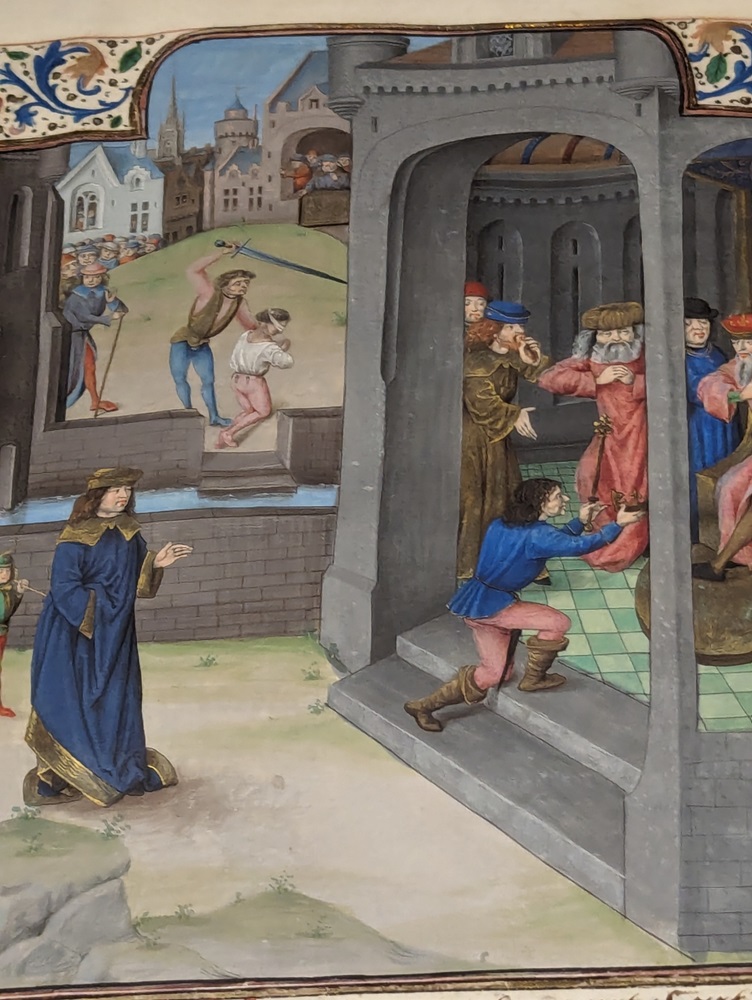
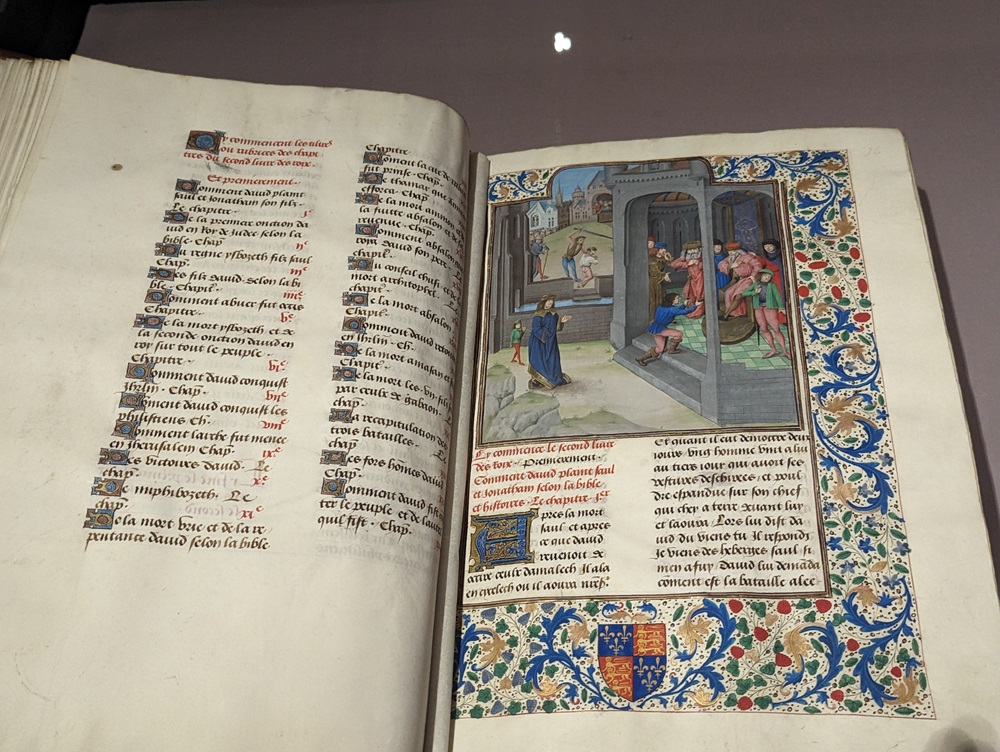
Sometimes it is also a work of art, as evidenced in the photo at the beginning of this post.
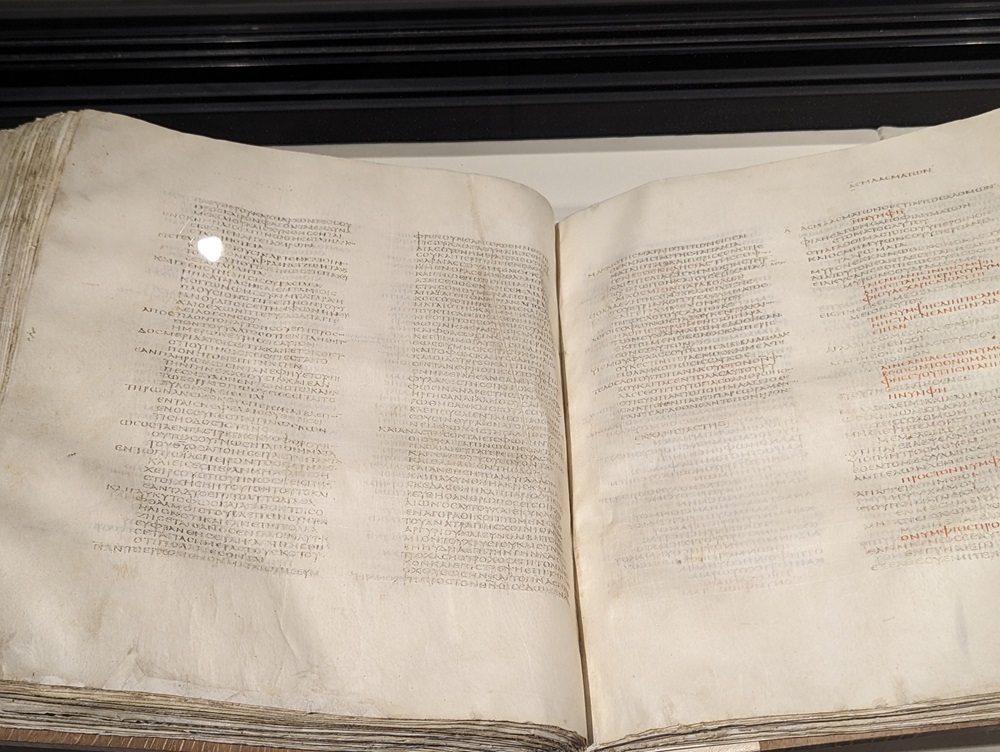
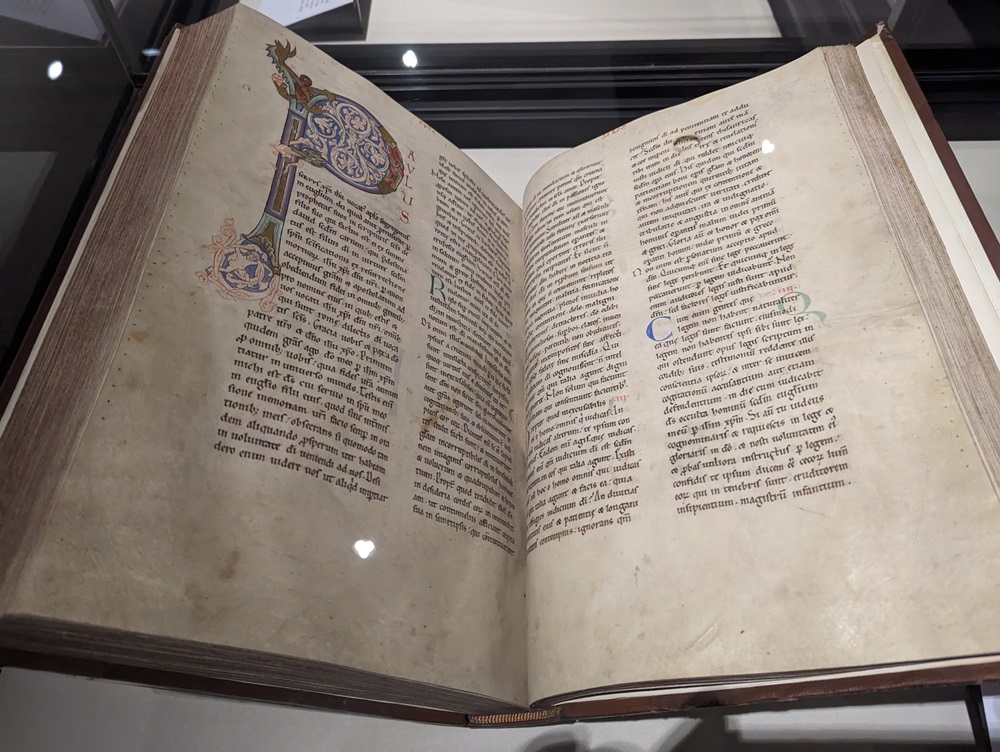
Today’s pictures are of Bibles found in the Treasure Room at the British Library in London. I’m pretty sure I had seen a Gutenberg Bible before (the world’s first book printed using moveable type), so what moved me the most was seeing Codex Alexandrinus and Codex Sinaiticus, which I remember from a university class decades ago as being two of the four oldest complete Bible manuscripts we have. The translations on my phone are based on these – as is whatever Bible you use.
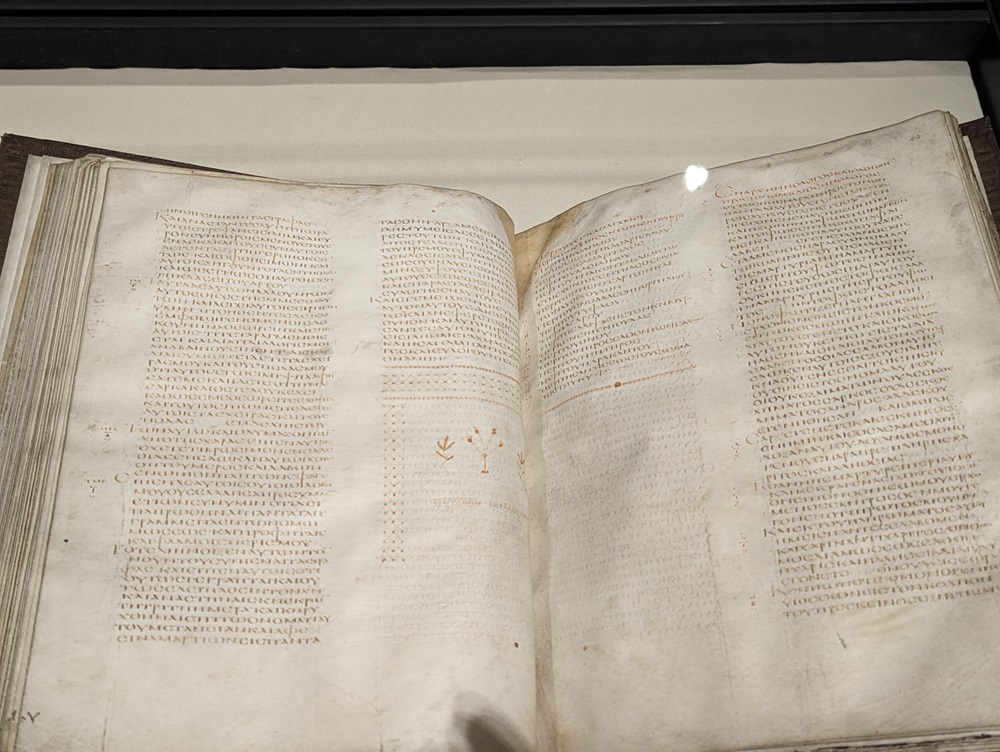
I don’t read Greek or Hebrew, but I still stared at them a long time. It isn’t often you get to see a book that is more than 1,600 years old, especially one that has had such an impact on our world.

 random thoughts from lorne