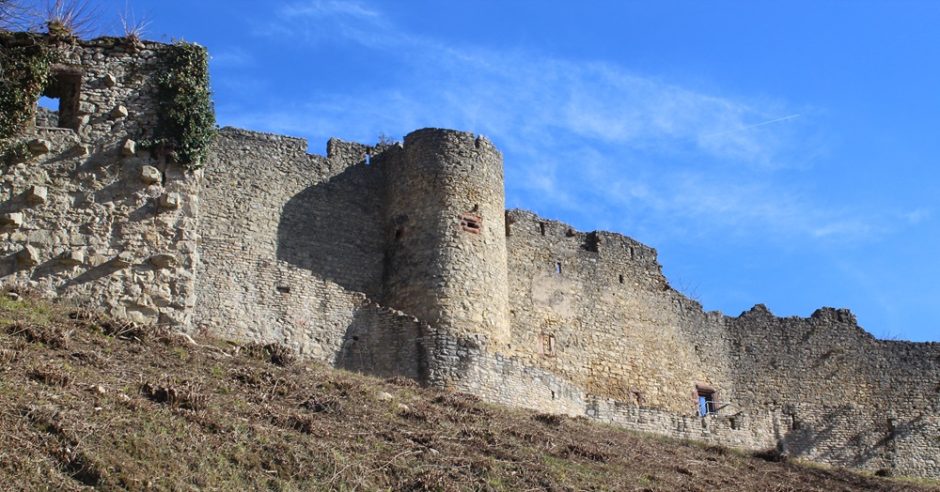

In elementary school and high school, my favorite subject was History. So it should come as no surprise that when I am on vacation I am on the lookout for things I learned about in school as well as new things. In this post from 2014 I saw firsthand something that I had learned about as a teen. These days I suspect that British parliamentary history is no longer on the curriculum and teens would have no idea what a pocket burrough was..
One of the fun things about a vacation, for me anyway, is traveling to locations that can bring history alive in a new way, places like Dunwich, a village in Suffolk County on England’s North Sea Coast. I had never heard of the town before our English hosts, Peter and Charlotte, suggested we drive there, walk along the beach and follow that with a visit to the local museum.
It was in the museum (http://www.dunwichmuseum.org.uk) that something I remembered from high school history books came alive. Dunwich was both a rotten borough and a pocket borough. If that sentence doesn’t make sense to you it’s not surprising, I’m a political junkie so I remembered the concept. You may not have been paying attention in class that day, since, as I recall it, most people found history pretty dry in school.
For almost six hundred years the town, which you probably never heard of before either, had two Members of Parliament representing its citizens. That may have made sense in the 13th century when Dunwich was a major centre about the same size as London, but coastal erosion became an insurmountable issue. Over the years most of it just dropped into the North Sea, a bit at a time. Dunwich was reduced in size, commercial and cultural importance; however a decline in population did not see a corresponding decline in political influence: today’s automatic redistribution of seats to reflect population shifts was unheard of. Liverpool, a place you probably have heard of, grew much bigger than Dunwich but had no Members of Parliament, while Dunwich continued to have two. To political scientists and historians the technical term for such a constituency was a “rotten borough,” a place with an electorate so small that it could be controlled (frequently by unsavoury methods).
It was also eventually, as I mentioned a “pocket borough,” so small that the parliamentary representation could be controlled by a single person. As the population shrank so too, logically did the number of eligible voters. Universal suffrage such as we have today was unknown, and before electoral reform in the 19th century the number of eligible voters for the two MPs had decreased considerably – and the MPs themselves had a huge say in who was considered eligible to vote in their constituencies. For decades the seats of Dunwich were controlled by the members of just a few families – they had the parliamentary seats in their pocket so to speak. And yes, you could buy a seat in the House of Commons; the privilege of representing Dunwich was available if the price was right. As England’s political system evolved, the rotten boroughs and pocket boroughs were consigned to the history books by the mid-19th century.
King John signed the Magna Carta in 1215, but that did not give every English man (and woman) the democratic rights they have today. The flower of democracy doesn’t spring fully grown from a seed overnight.
While American industrialist Henry Ford once famously proclaimed “History is bunk,” I think a good knowledge of the past is crucial to understanding the present and preparing for the future. It is easy to forget just how undemocratic even our democratic countries have been in the past, that 21st century democracy with universal suffrage and a free electoral system did not just spring into being overnight but rather evolved and grew over the years. I think that is something frequently forgotten when we look at the growing pains of emerging democracies of eastern Europe or elsewhere that have at times exhibited signs of being less than perfect.

 random thoughts from lorne