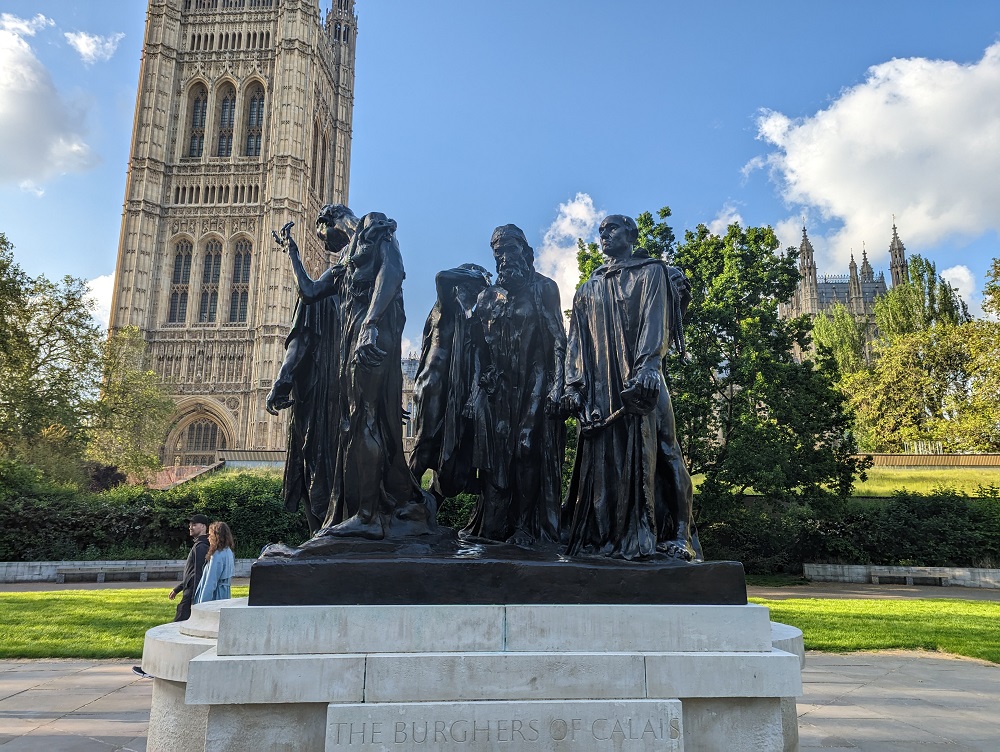
It had been a long day. And the friend I was with lives just outside London, so I didn’t want to bore him by visiting sites he’d seen dozens of times before. But he’d never seen the Burghers of Calais, one of Auguste Rodin’s most famous sculptures.
I will admit to being a little surprised. But not everyone pays attention to sculpture. Especially in London, where it seems there’s a different statue on every street corner. usually of a dead war hero.
This one though is found beside Parliament. I have never been able to figure out exactly why. A reminder perhaps of what people might do in wartime – and of the willingness of some leaders to sacrifice themselves to save the lives of others.

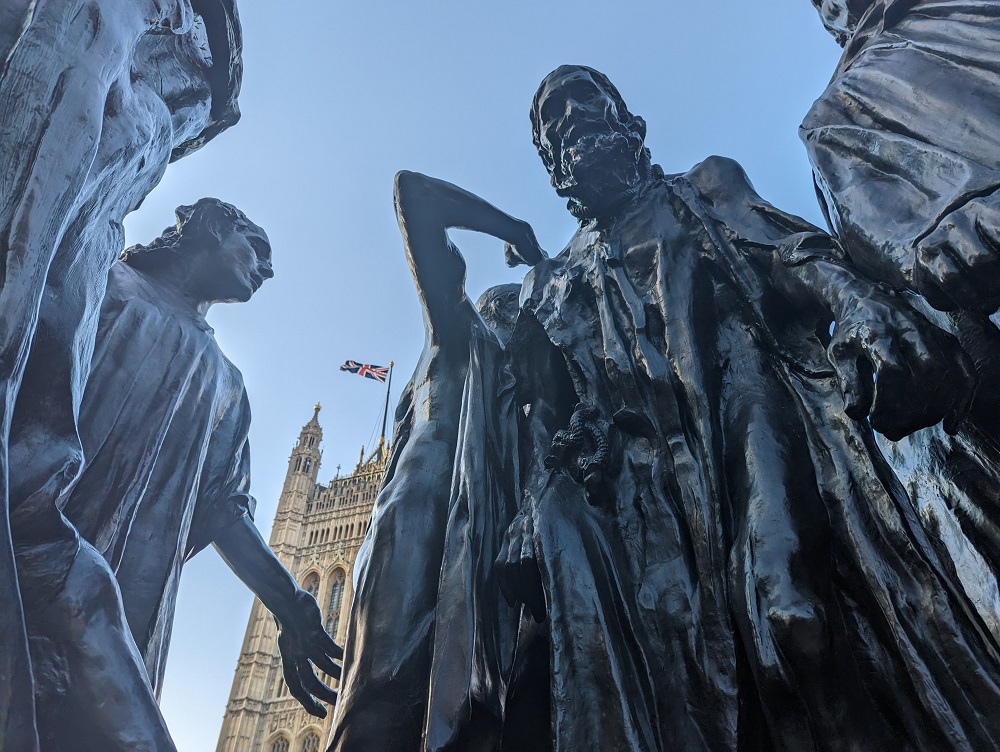
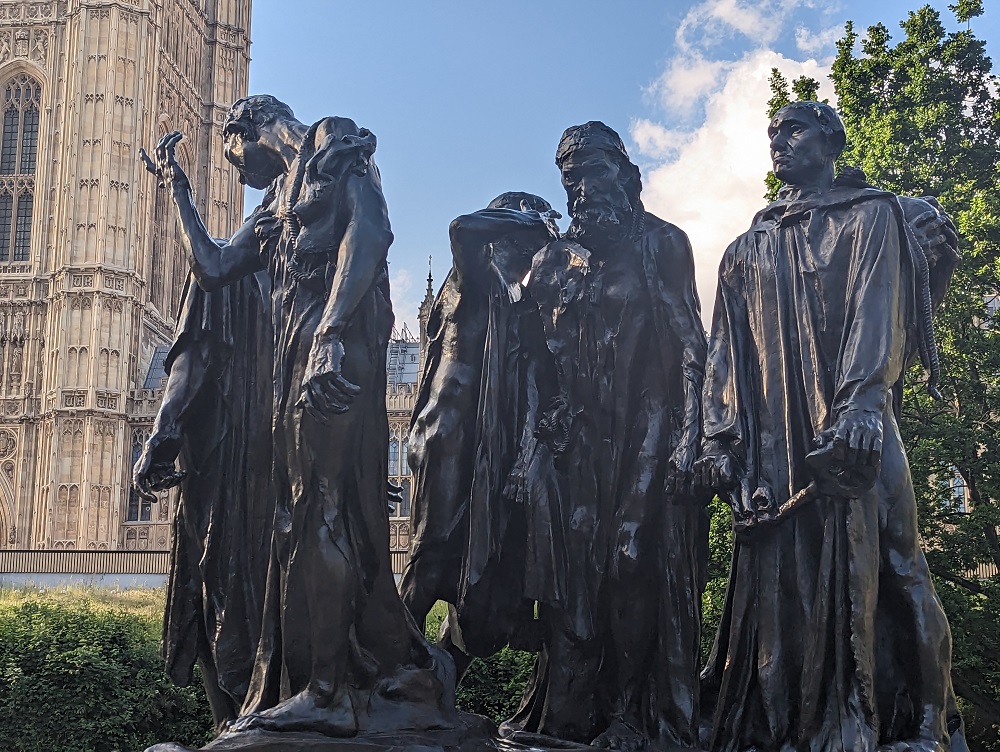
The six burghers were municipal leaders in 14th century France. When their city, Calais, was besieged by the English they were part of a deal in which they surrendered their lives, but the city would be spared from destruction. Rodin’s sculpture captures the moment of surrender, the anguish of such a choice as they walk to certain execution, knowing that in this act other lives are being saved.
Of course, they would have had a Christian worldview. The would have understood sacrifice, giving a life to save other lives, becasue that is what Jesus did.
I wonder if today’s civic and political leaders have it in them to make such a sacrifice, to lay down their lives for the sake of the community. Somehow it doesn’t seem like it to me – though I am possibly very wrong.
It also would depend, I am sure, on the leader and his or her worldview. Those who are selfish and narcissistic are unlikely to make the gesture, even in a crisis. Those who desire to serve are more likely to do so.
The problem of course is that when we elect leaders we don’t usually do so in a crisis situation. There is little in ordinary times that to show how someone will react when confronted with the unexpected. We elect ordinary people, we don’t know if heroism is in them.

In choosing ordinary people however, we need to choose wisely. Character counts, but all too often voters ignore that, choosing instead according to ideology or a party label.
So does worldview. What beliefs underscore the policy positions taken by today’s leaders. Are they built on rock or on sand? Do they follow the trends and look to gain popularity? Or do they understand that sometimes leadership requires tough choices that could bring about electoral; defeat, even if they are the right thing to do?
What characteristics do you look for in a leader? The comments section is open. Can you think of anyone today who would act as the Burghers of Calais did more than 600 years ago?

 random thoughts from lorne